Digital Orchard and Kodak Film Lab introduce Scanity 2 at Pinewood Studios
07 October 2026
Back to news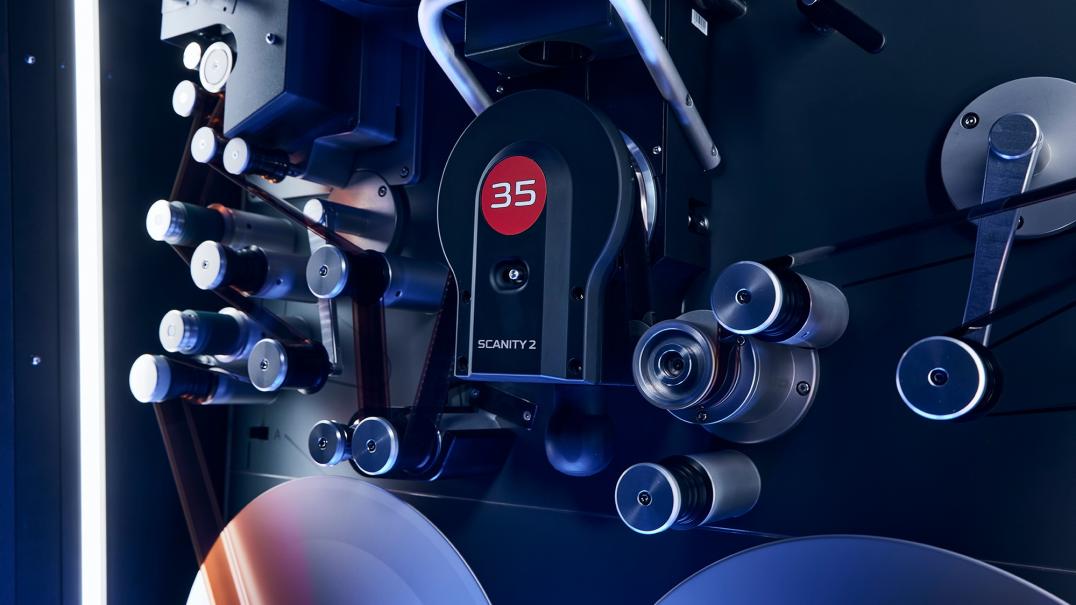
Digital Orchard has completed the installation of a new DFT Scanity 2 film scanner at the Kodak Film Lab at Pinewood Studios, where Digital Orchard and Kodak are partnered for film process and scan services. The installation brings one of the latest generations of high-end film scanning technology to a UK facility supporting productions and archive projects across 16mm and 35mm film. (Photo Credit: DFT)


New film scanning technology brings high-end 4K RGB-IR scanning, HDR performance and increased throughput to film production, post-production and restoration workflows.
Digital Orchard has completed the installation of a new DFT Scanity 2 film scanner at the Kodak Film Lab at Pinewood Studios, where Digital Orchard and Kodak are partnered for film process and scan services. The installation brings one of the latest generations of high-end film scanning technology to a UK facility supporting productions and archive projects across 16mm and 35mm film. “Filmmakers demand excellence from film and Kodak is committed to delivering it. By continually upgrading and future-proofing our film platforms, lab processors, and scanning equipment, we provide truly unique and unparalleled images. Installing the Scanity 2 is the natural next step in this mission. We can’t wait to show you the stunning image quality this latest addition, in partnership with Digital Orchard, brings to our services,” said Antonio Rasura, Director, Technical and Labs at Kodak.
Developed by DFT, Scanity 2 builds on the proven foundation of the original Scanity, combining high-end 4K RGB-IR image quality with high-speed performance in a future-ready platform. It is designed for production, post-production, preservation, restoration and high-volume digitisation workflows. For Digital Orchard, the system represents a significant development in film scanning technology, updating the internationally recognised Scanity HDR which was released in 2014.
The Scanity 2 is primed for commercial use after several months of behind-the-scenes testing. Norbert Hinckers, CEO of DFT, stated “Kodak/Digital Orchard were the natural choice to conduct the first beta testing of Scanity 2… Their extensive experience operating Scanity systems, combined with their expertise in film digitisation and high-volume production, made them an ideal partner for evaluating the next generation of the platform in demanding real-world workflows.” Hinckers adds: “Their feedback during the beta phase was invaluable, and we are delighted that they subsequently placed the first order for Scanity 2.”
What is Scanity 2?
Scanity 2 captures film at native 4K resolution while combining RGB colour information with infrared imaging. Its imaging system combines multi-stage high-resolution TDI sensors with GPU-based image processing and Optical Pin Registration. According to DFT, the scanner can scan 35mm 3-perforation film at speeds of up to 56 frames per second in 4K RGB-IR, with different operating modes allowing facilities to balance image quality, dynamic range and throughput. Dan Redrup, Head of Scanning at Digital Orchard stated “What makes Scanity 2 special is the combination of new, updated optics, stability, processing, speed and quality,” says Dan. “It is setting a new benchmark in film scanning, with a lower signal-to-noise ratio giving a clean, filmic image, alongside full-perforation overscan.”
The system's three dynamic operating modes provide different levels of workflow flexibility within a single machine. Multi-Stage TDI HDR technology provides the dynamic range of a high-end HDR system at real-time speed, while RGB-IR imaging provides an infrared channel that can assist with dirt-matte generation during restoration. Optical Pin Registration precisely positions each frame along the horizontal and vertical axes, providing pixel-precise frame positioning and touch-free image stability, including with damaged or missing perforations. Full-Perf Overscan provides full perforation capture for complete frame and audio-track coverage, with the near-edge-to-edge detail making Scanity 2 particularly suited to restoration work requiring large overscan images. A WetGate option is also available for 16mm and 35mm film to help address surface imperfections during scanning.
The next generation of Scanity
Scanity 2 retains the original Scanity platform's gentle, continuous film transport and TDI line-scanning approach while introducing a new camera system and next-generation image processing. The result is a wider range of operating speeds, from real-time 4K scanning to up to 56 frames per second for 35mm 3-perf film, according to DFT. Dan highlights the combination of increased dynamic range and throughput: “Scanity 2 can now scan MAX HDR across all film stocks at near real-time. It offers higher dynamic range scans across all modes: Max HDR, Performance and Speed, as well as the ability to scan negatives in real time and faster.”
Supporting film production and preservation
The arrival of Scanity 2 comes as film continues to be used both as a creative capture medium and as an important archival format. For productions shooting on film, the scanner provides a key link between the original negative and the digital post-production workflow. Dan says the technology reinforces the industry's commitment to film: “Scanity 2's development and release is a real boon for productions capturing their stories on celluloid. It reiterates the commitment in the industry to keep this art form alive, thriving and buoyant.”
The increased scanning capability can also support post-production, visual effects, colour grading and final delivery by providing higher-quality scans, improved dynamic range and more flexible colour workflows. “With the capabilities of this new technology, we can offer higher quality outputs for all sectors of the industry, improving outputs, timelines and colour pipelines in a seamless workflow.”
For Digital Orchard and Kodak, the investment represents a longer-term commitment to supporting film workflows from processing through to digitisation. Dan states “Digital Orchard and Kodak's investment in this key area of our business is a really exciting step forward to support and enhance our offerings to our clients.”
Preserving the image and creative intent
Film preservation is about more than converting a physical film element into a digital file. The scanning stage captures the information contained within the original negative, creating a digital representation for restoration, grading, archiving and future access. Scanity 2's combination of native 4K RGB capture, HDR imaging, infrared information and precise frame registration is designed to provide a detailed representation of the original film. “Scanity 2 will now deliver superior quality images captured from the client's precious negatives,” says Dan. “It will also give the option to capture full-colour Max HDR images from both 16mm and 35mm with near real-time scanning speeds.”
Looking ahead
The installation of Scanity 2 at the Kodak Film Lab gives Digital Orchard and Kodak increased scanning capability within their film processing and scanning partnership. And for DFT, they look forward to continuing their close relationship with both companies, “building on the excellent cooperation between our teams, and achieving many more milestones together in the years ahead.” For filmmakers and archives, the significance lies not simply in faster scanning, but in combining speed with native 4K RGB imaging, HDR capability, precise image registration and additional information from the film element.
As film continues to serve both contemporary productions and archival collections, Scanity 2 provides another link between the physical film negative and increasingly sophisticated digital production, post-production and preservation workflows.